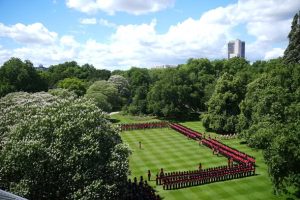
Formation
The Regiment was formed in Bruges, Flanders in May of 1656, the Regiment was formed from loyal men who had gone into exile with King Charles II rather than live in tyranny under Cromwell, the Regiments Colonel was Lord Thomas Wentworth and so there the Regiment was formed in a region of Europe that would become more than familiar over the next almost four centuries.
A Regiment of Grenadiers
On the 29th July 1815 the following order was published
“In the name of the King, HRH The Prince Regent has been pleased to approve that the Regiment should henceforth be made a Regiment of Grenadiers and styled “The First or Grenadier Regiment of Foot Guards” in commemoration of their having defeated the Grenadiers of the French Imperial Guards at Waterloo”
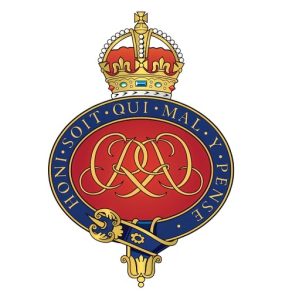
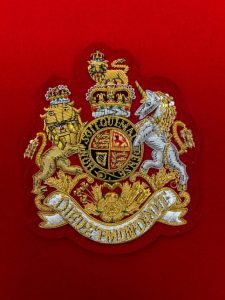
The Primary Badge of the Regiment
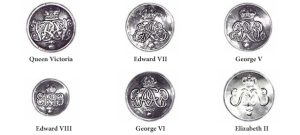
The Royal Cypher reversed and interlaced, surrounded by the most noble order of the garter and surmounted by the Imperial Crown
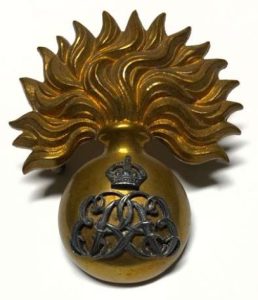
The Secondary Badge worn in Forage Caps and berets
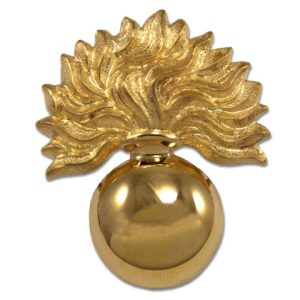
Many honours were taken after the Battle of Waterloo by the Regiment to remember this historic victory, not only was the Regiment re-named but it was also awarded the French “Grenade Enflammee” or flaming Grenade as a cap badge.
Our Secondary Cap Badge is known to the Regiment as the Grenade Fired Proper (Which is a battle honour worn with pride)
In heraldry we can break down the meaning of the cap badge:
Grenade: A hollow, ball-shaped iron bomb with a small neck at the top
Fired: A bursting flame is actively shooting or erupting out of the top neck of the ball
Proper: The entire object is painted in it’s realistic, natural colours
(It will also be a visual reminder to the soldier of how it is to be when thrown, such as pulling the pin from a modern grenade)
There are 17 flames to the Grenade cap badge whilst each flame point does not represent anything at all, those 17 flames are unique to the Grenadier Guards, whilst other units in the British Army may have a Grenade Fired Proper as a cap badge 17 flames is unique to the Grenadier Guards only. In the Victorian and Edwardian period Grenades were designed and manufactured with 13 and 15 flames and at the time of issue were unique to the Regiment.
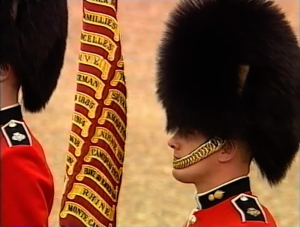
The bearskin cap, white plume and curb chain
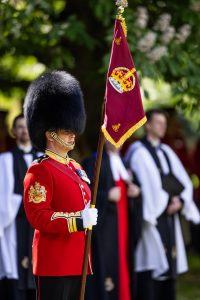
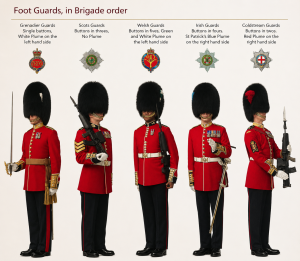
All Grenadier Companies in Infantry Regiments of the British Army wore the distinctive bearskin caps, when the First Foot Guards became the First or Grenadier regiment of Foot Guards a Regiment of Grenadiers each man was to wear the Bearskin Cap, continued to this day by the men and women that serve in the Regiment, to create uniformity in the Brigade of Guards in 1832 King William IV granted the Coldstream and Scots Guards the bearskin cap.
To make the bearskin cap presentable on parade, the fringe was brushed down and from the sides was brushed back to produce the effect of an apple at the front and a pear from behind, to create the all over spikiness bearskins were left hanging upside down for hours in preparation for wear.
The white plume of the Grenadiers is seen from a flank but never from the front or rear when fitted in the bearskin cap
The curb chain is facial armour to protect soldiers when this was worn in battle from sword attack, the brass links can be gently and carefully bent so that the curb chain fits flat to an individuals face.
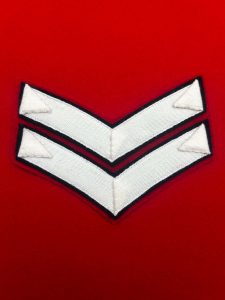
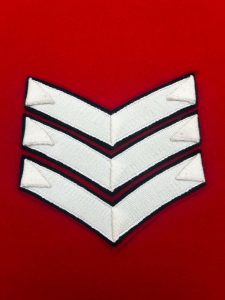
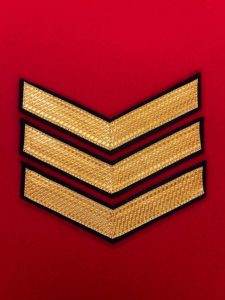
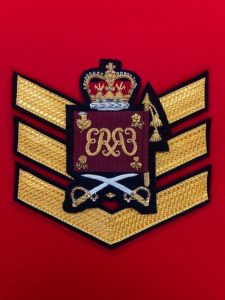
Grenadier Guards Rank
Private soldiers were granted the right to be called Guardsman in 1919 by King George V
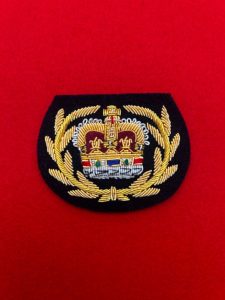
Lance Corporals wear two chevrons (stripes) as Queen Victoria did not like to see only one chevron on a tunic
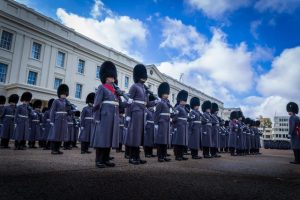
 All Battalions of the Regiment have the right to march through the City of London with Colours flying, drums beating and bayonets fixed. Battalions are invariably to exercise this right when marching through the City boundaries, but are to inform the Lord Mayor of their intention to do so. The right, formerly possessed by the 3rd Battalion only, was extended to the remaining Battalions of the Regiment in October 1915. The authentic challenge to a body of troops entering the City boundaries, and the reply, is:
 On 4 March 1964, the Council of the City of Manchester resolved unanimously that the Council “place on record their great admiration and appreciation of the renowned achievements and glorious traditions” of the Regiment. On 16 May 1964, at a parade in Manchester, a Scroll of Honour was presented to the Regiment recording the resolution of the City Council to grant the Regiment the right to march through the City with Colours flying, drums beating and bayonets fixed. It is not correct to refer to this honour as one of receiving the Freedom of the City, although the privileges bestowed are similar.
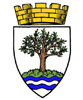 In pursuance of a resolution passed at a special meeting of the City Council of Worcester on the 27th April 1999, “it was resolved that in recognition of the long and close association between the City and the Regiment, the City confer upon the Grenadier Guards Regiment the right, privilege and honour of entering and marching through the City on ceremonial occasions with sword drawn, bayonets fixed, drums beating, band playing and Colours flying”. A Scroll of Honour recording this was presented to the Regiment at a Parade in Worcester on the 22nd May 1999.
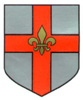 Whereas at a special meeting of the Council of the City of Lincoln held at the Guildhall, Saltergate, Lincoln on the eighth day of May, two thousand and eight, it was proposed and resolved unanimously that pursuant to Section 249 of the Local Government Act 1972, The Mayor and Citizens of the City of Lincoln do confer the Honorary Freedom of the City upon the Officer Commanding, Officers, Non-Commissioned Officers and Junior Ranks of The Grenadier Guards in recognition of the important contribution which they have made to the City and the Nation during war and peace as well as continuing their traditional and privileged tasks of mounting guard over the Sovereign and in the certainty that the close ties which bind the Grenadier Guards and the City will draw even closer. We, the Mayor and Citizens of the City of Lincoln have resolved to admit and have admitted the Grenadier Guards in perpetuity to the Honorary Freedom of the City of Lincoln.